
The LeanFluencer
Blog
Production Consolidation Without Downtime: Lessons from the Mepal Project
Browse blogs
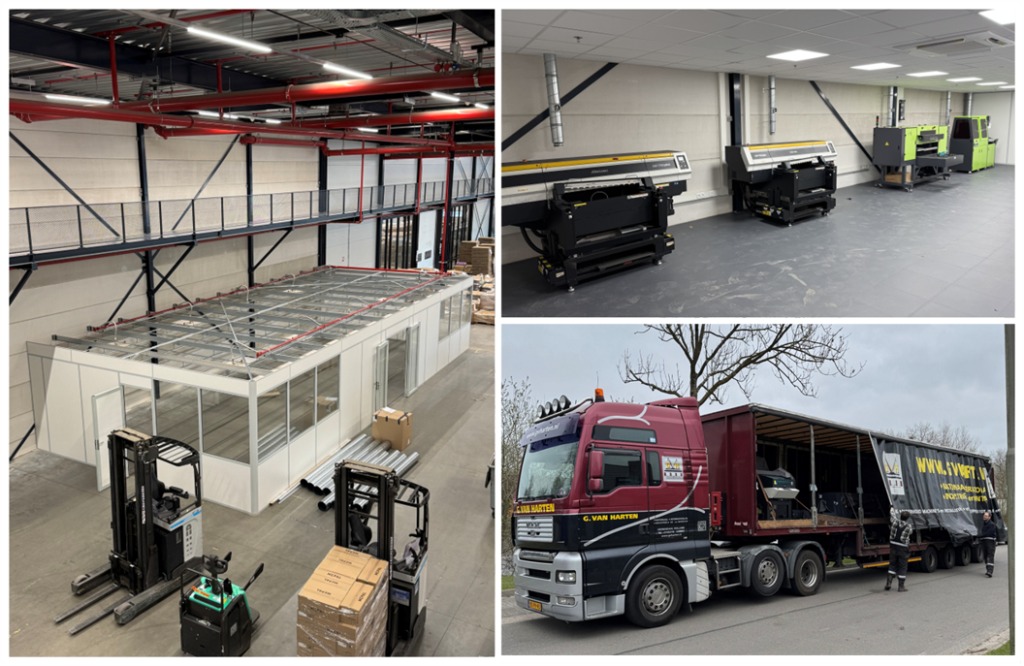
How Mepal consolidated its MyMepal production activities while maintaining operational continuity.
Operational Excellence is not always about improving an existing production process. Sometimes, it requires rethinking where and how activities are organised.
For Mepal, this meant consolidating its MyMepal personalisation activities from Amersfoort into the company’s main logistics and manufacturing facility in Lochem, the Netherlands.
The objective was to simplify operations, reduce logistical complexity and create greater flexibility, without disrupting ongoing production or customer deliveries.
Simplifying the production footprint
Operating production activities across separate locations introduces additional coordination, logistics and organisational complexity.
By bringing MyMepal activities together with the main operation in Lochem, Mepal aimed to improve alignment between production and logistics, make better use of existing infrastructure and establish a more flexible operating environment.
However, consolidating production is not simply a matter of moving machines. Equipment, infrastructure, processes and people all need to be ready at the right moment.
The challenge was to achieve the intended operational improvements without creating disruption during the transition.
Managing change while keeping operations running
Moving Industries was responsible for the end-to-end project management of the transfer.
The project involved preparing the receiving facility, dismantling and transporting specialised production equipment, adapting layouts and infrastructure, and coordinating installation, calibration and commissioning.
At the same time, the existing activities in Lochem had to continue.
A structured project approach connected technical preparation, operational requirements, logistics, risk management and decision-making.
By identifying dependencies early and coordinating activities across both locations, the project team was able to prepare the transition while protecting day-to-day operations.
From relocation to operational readiness
One of the most important aspects of a production transfer is the distinction between equipment being installed and production actually being ready to operate.
A successful transition requires more than completing the physical move. Equipment must be tested, supporting (IT) infrastructure must function and production processes must be ready to restart.
For Mepal, the physical relocation was completed at the end of March 2025. Production resumed in Lochem shortly after.
The project was delivered on time and within budget, without losing production days.
What can Operational Excellence professionals learn?
The Mepal project illustrates several principles relevant to Operational Excellence and Continuous Improvement.
1. Simplification can be a powerful improvement strategy.
Reducing the number of operational locations can help eliminate unnecessary coordination and logistical complexity.
2. Operational continuity should be designed into the project.
Maintaining production and customer service requires early planning, risk assessment and coordination between all involved disciplines.
3. Technical completion is not the same as operational readiness.
A production transfer is only successful when equipment, processes, infrastructure and people are ready to operate together.
4. Cross-functional coordination makes the difference.
Engineering, operations, logistics, management and external specialists must work towards one integrated plan rather than treating their activities as separate projects.
The result: a more integrated operation
The MyMepal production activities were successfully transferred from Amersfoort to Lochem, allowing Mepal to operate these activities from its main logistics facility.
The consolidation created a more integrated footprint and a stronger foundation for operational flexibility.
The broader lesson is that Operational Excellence is not limited to improving individual processes. Sometimes, meaningful improvement comes from redesigning the way operations are organised, while carefully managing the transition from the existing situation to the new one.
This case is based on a production consolidation project managed by Moving Industries for Mepal.
- Moving Industries